


Transforming School Food Technology Suites into Professional Culinary Hubs: The 2026 Standard
The evolution of Food Technology teaching spaces in UK schools continues into 2026, moving away from outdated, domestic-style layouts towards purpose-designed educational environments built for modern curricula, safety, and durability.
Today’s Food Technology suites must support high levels of weekly use, safe student circulation, and clear teacher supervision — all while meeting education-specific health, safety, and building regulations. A specialist, education-focused refurbishment ensures these environments are robust, hygienic, and fit for long-term teaching needs, without crossing into commercial or hospitality kitchen design.
By focusing on school-appropriate specification, layout, and materials, schools can deliver engaging, future-ready Food Technology spaces that support practical learning and skill development.
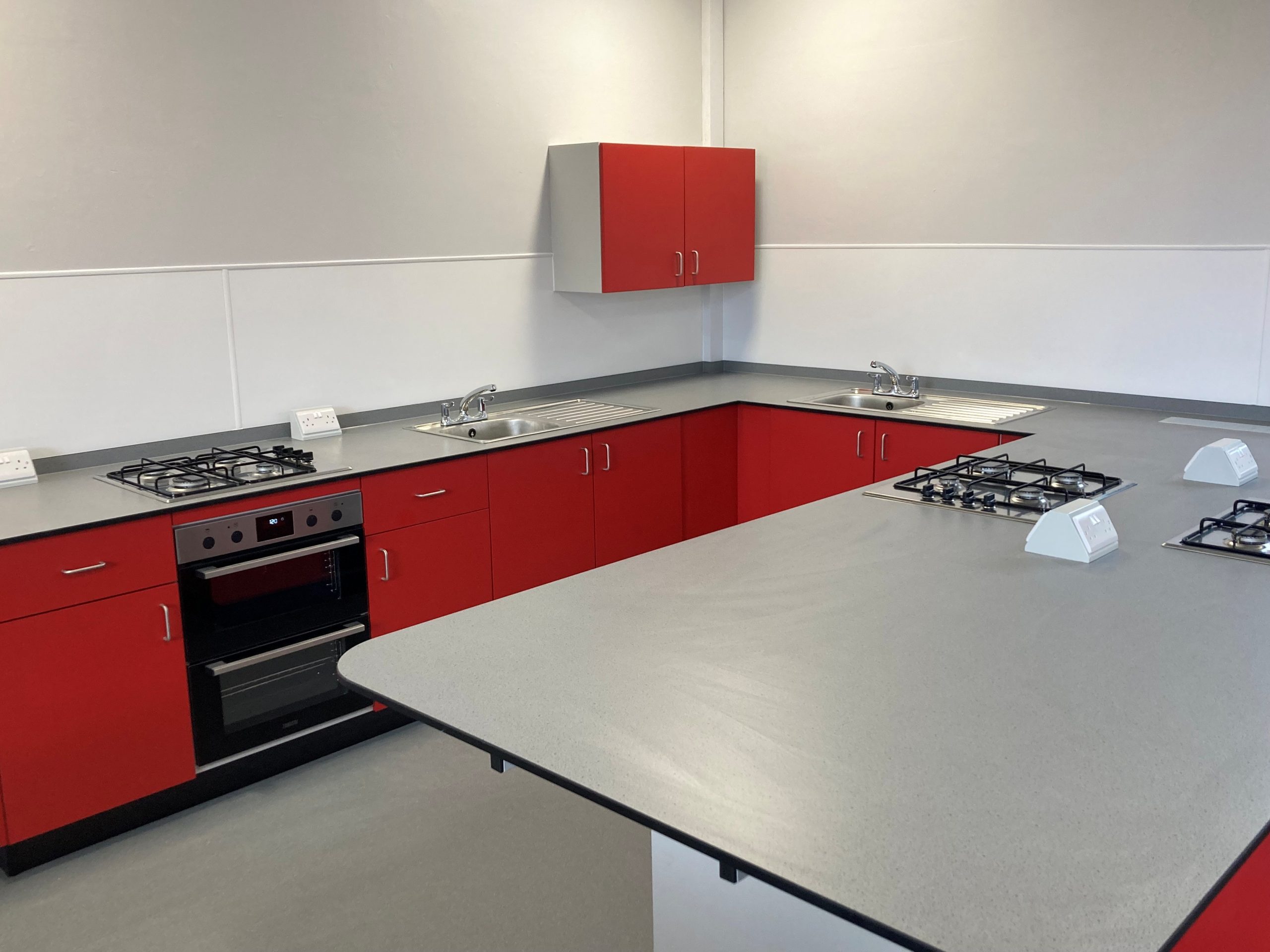
Key Takeaways
- Built for Education Use: Food Technology suites must withstand intensive school use while remaining appropriate for teaching environments.
- Safer Cooking Technology: Induction hobs improve classroom safety, reduce ambient heat, and support lower energy consumption.
- Hygienic by Design: Seamless solid surfaces reduce bacteria traps and simplify cleaning between lessons.
- Integrated Safety Systems: Gas-proving, ventilation, and fire safety must be designed specifically for teaching spaces.
- Zoned Learning Areas: Clear separation between preparation, cooking, and theory areas improves supervision and lesson flow.
Curious about how we’ve helped UK schools transform their classrooms? Explore our case studies here to see real-world examples of our innovative classroom conversion solutions!
Intelligent Layout & Safety Zoning for Schools
In 2026, Food Technology suite layouts are no longer based on domestic kitchen principles. Instead, specialist designs focus on clearly defined teaching zones — including preparation, cooking, and theory areas — tailored to classroom management and student safety.
Wide circulation routes between benches reduce congestion and lower the risk of accidents during practical lessons. Just as importantly, layouts prioritise the teacher’s line of sight, ensuring all cooking points are visible from a central position.
Specialist designers avoid placing tall units or appliances where they could obstruct supervision, instead favouring perimeter cooking zones with central work areas that support both practical and theory-based teaching.
Heavy-Duty Education Appliances (Not Domestic)
A common issue in poorly planned refurbishments is the use of domestic-grade appliances that simply aren’t designed for sustained school use. In Food Technology classrooms, ovens and hobs are used intensively across multiple lessons every day.
Specialist education refurbishments specify heavy-duty, education-appropriate appliances that are designed for reliability, safety, and ease of maintenance in a school setting.
By 2026, induction technology has become the preferred option in many schools. Induction hobs reduce burn risk, keep classrooms cooler, and are easier to clean between lessons. Their improved energy efficiency also supports schools working towards sustainability and Net Zero targets.
Hygienic Surfaces & Durable Materials
Hygiene standards in Food Technology teaching spaces have increased significantly. Specialist solid surfaces such as Velstone or Corian are widely used due to their non-porous, seamless construction, which prevents bacteria build-up and eliminates hard-to-clean joints.
Unlike tiled splashbacks or laminate worktops, these surfaces support rapid cleaning and long-term durability — essential in high-use teaching environments.
Flooring is equally important. Education-grade, non-slip vinyl flooring with coved edges allows for thorough cleaning and prevents moisture ingress beneath units, helping schools avoid lingering odours and long-term maintenance issues.
Specialist Ventilation & Environmental Control
Managing heat, humidity, and odours during practical lessons requires more than standard ventilation. Specialist Food Technology designs incorporate balanced ventilation systems that extract heat and airborne grease while reintroducing filtered, tempered air to maintain a comfortable learning environment.
Modern systems increasingly use smart controls to respond automatically to changes in temperature, humidity, and CO₂ levels, ensuring classrooms remain conducive to learning throughout the day while protecting the building fabric.
The Value of a Turnkey, Education-Focused Approach
Refurbishing a Food Technology suite involves multiple disciplines — electrical, mechanical, gas safety, flooring, and furniture installation — all within tight school holiday windows.
A specialist turnkey provider like Labform manages every stage of the process, coordinating trades efficiently and manufacturing furniture to precise specifications before installation. This approach minimises delays, reduces risk, and ensures the suite is fully operational for the start of term.
By taking full responsibility for design, manufacture, and installation, a turnkey partner delivers a reliable, compliant Food Technology environment — without compromise.
Read Next
Sorry, we couldn't find any posts. Please try a different search.