


Future-Proofing Science and Food Technology Spaces for 2026 and Beyond
Curriculum requirements, teaching methods, and class sizes continue to evolve, meaning school science and Food Technology spaces must be designed to remain effective for many years after installation. Future-proofing in an education setting is not about chasing trends, but about creating robust, adaptable environments that can accommodate change without requiring constant refurbishment.
For 2026 and beyond, the focus is on flexibility within fixed, compliant layouts, long-term durability, and infrastructure that can support future teaching needs while remaining safe, manageable, and cost-effective for schools.
Key Takeaways
-
Adaptable Teaching Layouts: Designing rooms that support different teaching styles without relying on complex or fragile furniture systems
-
Infrastructure Ready for Growth: Allowing capacity for additional power, services, and teaching technology as requirements change
-
Durable, Long-Life Specification: Selecting materials and fittings that withstand intensive daily use in education settings
-
Inclusive by Design: Ensuring layouts support accessibility, visibility, and safe circulation for all students
-
Efficient Storage Planning: Using well-planned storage to allow departments to evolve without clutter or compromise
Curious about how we’ve helped UK schools transform their classrooms? Explore our case studies here to see real-world examples of our innovative classroom conversion solutions!
Flexible Teaching Layouts Without Compromising Safety
Rather than relying on fully mobile benching systems, future-proof science and Food Technology spaces are designed with carefully planned fixed layouts that allow teachers to adapt lesson delivery while maintaining safety and supervision. Understanding exactly what compliance requires in these environments is covered in detail in our school science lab refurbishment and compliance guide, which explains the specific M&E and ventilation standards that govern how layouts must be structured.
Clear circulation routes, well-spaced workstations, and thoughtful zoning enable classrooms to transition smoothly between practical work, demonstrations, and theory-based learning. These layouts reduce congestion, improve sightlines, and allow teachers to manage classes confidently regardless of lesson format.
By designing flexibility into the use of space, rather than the movement of heavy furniture, schools gain adaptability without increasing maintenance or safety risks.
Infrastructure Designed for Long-Term Use
Future-proofing also means ensuring that services infrastructure is sufficient, accessible, and scalable. Rather than referencing specific technologies that may change over time, specialist designs focus on providing adequate power provision, robust containment, and safe access points that can accommodate future teaching tools as needed.
This approach ensures that as digital resources and teaching aids evolve, schools are not constrained by insufficient services or disruptive retrofit work. Importantly, all infrastructure is integrated discreetly to avoid trip hazards, visual clutter, or maintenance challenges. For schools planning a refurbishment, understanding how long a school science lab refurbishment takes and what the infrastructure phases involve is essential for realistic timeline planning.
Science & Food Technology Spaces Built for Multi-Use Teaching
Both science labs and Food Technology rooms increasingly support a mix of practical instruction, demonstrations, and classroom-based learning. Future-proof designs allow these spaces to function effectively across different lesson types without compromising their primary purpose.
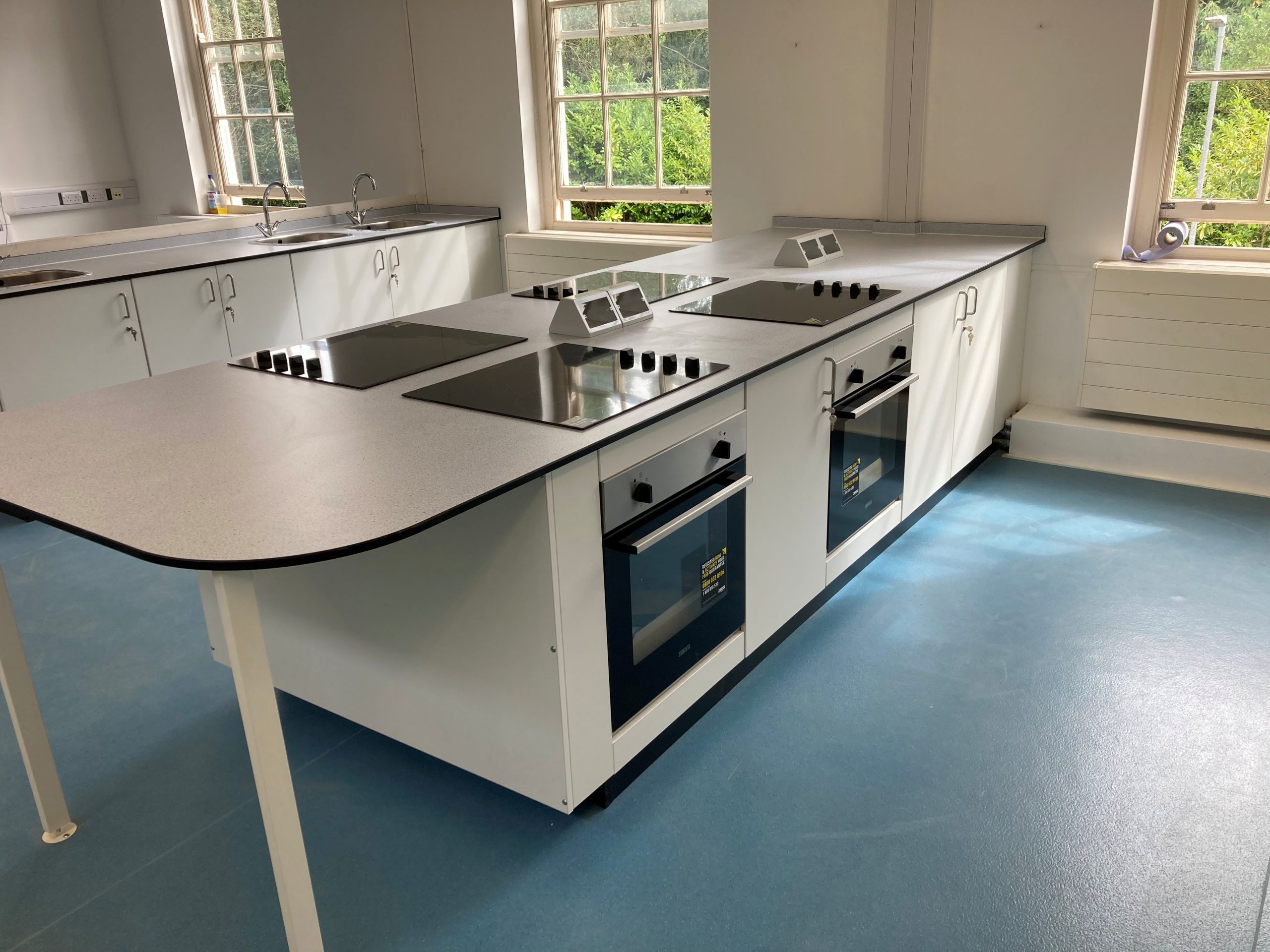
In Food Technology suites, layouts support practical cooking lessons while also enabling clear demonstration areas and structured theory teaching. For schools considering what a modern Food Technology room should include, our guide to food tech room fitting best practices covers layout principles, equipment specification, and the hygiene and safety requirements that govern these spaces.
In science laboratories, bench spacing, teacher positions, and service access are planned to support a wide range of experiments and learning activities over time. The goal is maximum usability, not conversion into alternative room types.
Sustainable, Efficient Design Without Over-Specification
Longevity is one of the most sustainable outcomes a school can achieve. Future-proof education spaces prioritise energy-efficient lighting, well-designed ventilation, and durable materials that reduce long-term running costs and maintenance requirements.
Rather than relying on emerging or specialist systems that may be costly to maintain, education-focused design favours proven solutions that deliver reliability, compliance, and ease of use for site teams. The case for why this type of specification is best delivered through a specialist science lab design and refurbishment service rather than a general contractor comes down to the in-house technical knowledge required to specify and install these systems correctly from the outset.
This ensures refurbished spaces remain efficient and practical throughout their lifespan.
Intelligent Storage and Department Growth Planning
As departments evolve, storage needs often change faster than layouts. Poor storage planning leads to cluttered worktops, reduced teaching space, and compromised safety.
Future-proof designs incorporate structured, high-capacity storage within both teaching spaces and preparation rooms. Tray-based systems, clearly defined equipment zones, and accessible cupboards allow resources to be organised logically and adapted as teaching requirements change.
By planning storage early in the design process, schools avoid the need for ad-hoc additions that disrupt workflows or reduce usable space. Our previous projects demonstrate how integrated storage planning has been delivered across a range of school science and Food Technology environments.
Summary
Future-proofing science and Food Technology spaces is about making the right decisions at design stage focusing on durability, flexibility of use, and long-term value rather than short-lived trends.
With specialist planning and education-led design, schools can create environments that continue to support effective teaching well beyond 2026. To discuss your project and book a free, no-obligation feasibility consultation, get in touch with the Labform team today.
Read Next
Sorry, we couldn't find any posts. Please try a different search.