


How UK School Bursars Should Plan & Budget a Science Lab Refurbishment in 2026
For most school bursars, a science lab refurbishment represents one of the largest single capital decisions of a decade. It is a complex project that touches building regulations, health and safety compliance, curriculum delivery, and long-term asset management all at once. Yet the planning process is often started too late, under-resourced, or handed to contractors who do not specialise in educational environments. This guide sets out a clear, practical framework to help bursars plan, fund, and procure a science lab refurbishment with confidence in 2026.
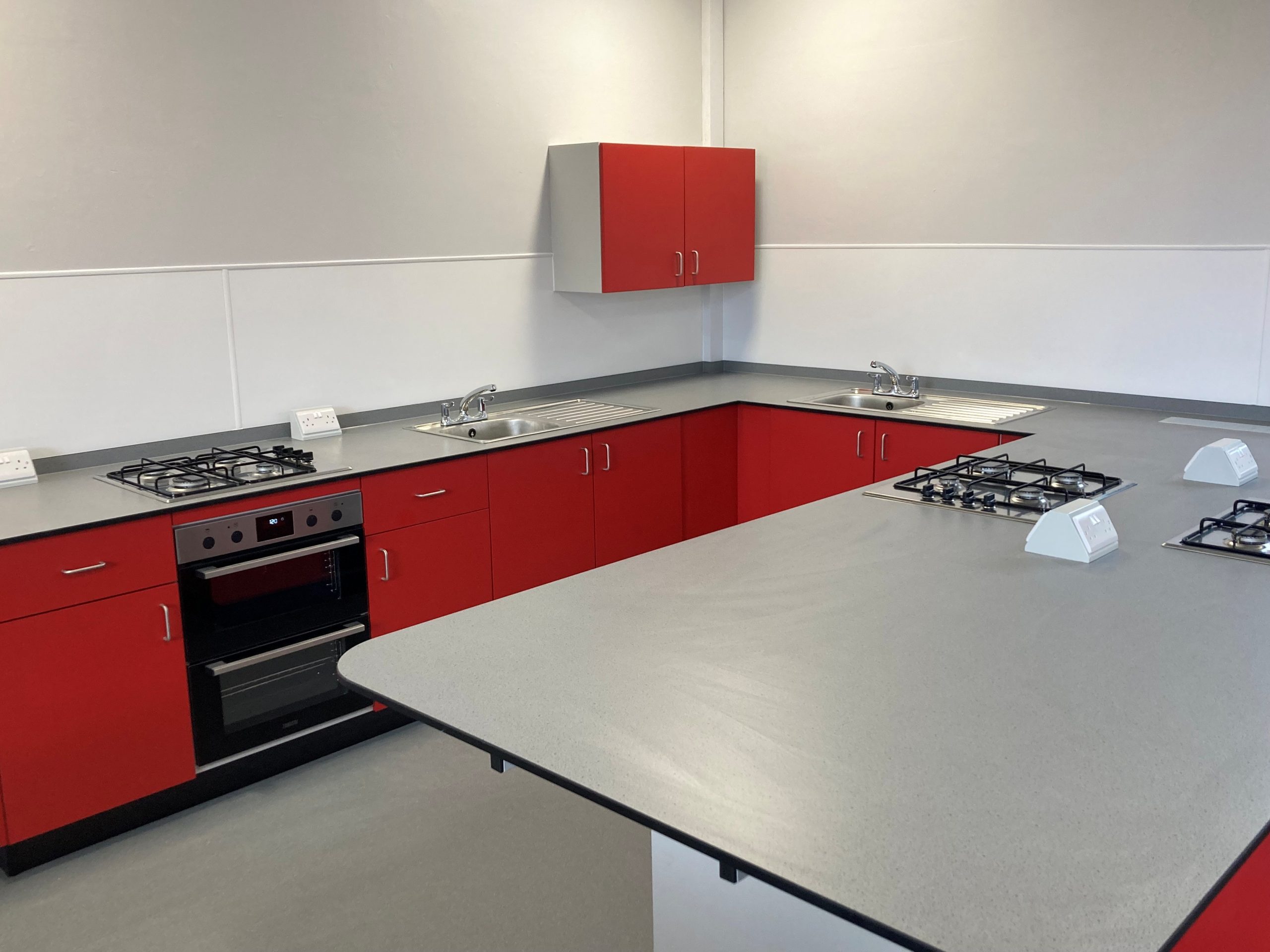
Key Takeaways
- Start Planning by Easter: Summer delivery requires design sign-off, procurement, and M&E scheduling to be in place before the end of the spring term.
- Understand Investment Tiers: The cost difference between furniture-only and full turnkey M&E refurbishment is significant — know what your budget covers before going to tender.
- Explore CIF Funding: Academy trusts and voluntary-aided schools may be eligible for Condition Improvement Fund grants to offset capital costs.
- Compliance Is Non-Negotiable: Any contractor must demonstrate knowledge of CLEAPSS G99, DfE standards, and current Building Regulations. This should be written into your brief.
- One Point of Contact Saves Time: A turnkey specialist reduces the bursar's management burden considerably compared to co-ordinating multiple independent contractors.
Curious about how we’ve helped UK schools transform their classrooms? Explore our case studies here to see real-world examples of our innovative classroom conversion solutions!
Understanding the Investment Tiers
One of the most common points of confusion at the start of a lab refurbishment project is what a given budget actually covers. School lab refurbishments typically fall into three distinct investment tiers, and conflating them leads to either unrealistic expectations or significant budget shortfalls mid-project.
Tier 1: Furniture Replacement Only
This covers the removal and replacement of benching, storage, and stools, without touching the mechanical, electrical, or gas services. It is the most economical option and is appropriate when the underlying M&E infrastructure is modern and fully compliant. However, it is often chosen for the wrong reasons namely, cost when the existing services are actually due for replacement.
Tier 2: Partial Refurbishment
A partial refurbishment typically involves new furniture alongside targeted M&E upgrades for example, replacing gas pipework or installing a new fume cupboard extraction system without a full strip-out. This is appropriate when services have been partially upgraded in the recent past and only specific elements are failing compliance.
Tier 3: Full Turnkey Refurbishment
A full turnkey project encompasses everything: strip-out, specialist M&E (including gas interlocking, chemical-grade drainage, and ventilation), bespoke furniture manufacture, flooring, ceilings, lighting, decoration, and handover with full certification. This is the appropriate scope for labs built before 2005, or any space that has not had a substantive upgrade in the past 15 years.
Labform Insight: "The most expensive refurbishments we undertake are not planned full turnkeys they are emergency remedial projects for schools that chose Tier 1 when their building needed Tier 3. A proper feasibility survey at the outset is always money well spent."
The Planning Calendar: Why Easter Is Your Real Deadline
The majority of school lab refurbishments are delivered during the six-week summer holiday, which is the only window long enough to complete the full scope without disrupting the curriculum. However, the work itself is only the final phase of a much longer process. Bursars who approach a specialist contractor in July expecting a summer delivery will be disappointed.
Step 1 — January to February: Initial Feasibility Commission a site survey and feasibility consultation. This establishes the scope, identifies M&E compliance gaps, and produces a ballpark budget range. At Labform, this consultation is offered at no charge.
Step 2 — February to March: Design Development Detailed CAD drawings are produced, revised, and signed off by the school. This stage includes furniture specification, M&E design, and compliance review against CLEAPSS G99 and current DfE standards.
Step 3 — March to April: Procurement & Scheduling UK-manufactured furniture typically carries a 10–14 week lead time. M&E trades and specialist flooring teams must be booked well in advance for the summer window. Easter is the effective point of no return for summer delivery.
Step 4 — July to August: Installation With a specialist turnkey contractor, the installation phase is tightly managed to the school's holiday window. All trades — M&E, furniture, flooring, decoration — work from a unified programme to hit the September handover date.
Step 5 — August: Handover & Certification A compliant handover includes gas pressure test certificates, COSHH-compliant fume cupboard commissioning records, electrical installation certificates, and a full O&M manual. These documents are essential for your school's compliance records.
Funding Your Project: Routes Available in 2026
Capital expenditure on a science lab refurbishment can be substantial. Understanding the funding landscape before committing to a scope is an important part of the bursar's role. The following routes are available to most schools and academy trusts in England in 2026.
Condition Improvement Fund (CIF) Eligible schools: Academy trusts (fewer than 3 schools), voluntary-aided, and sixth-form colleges. Prioritises projects addressing health & safety compliance failures. Lab M&E upgrades are typically strong candidates.
Schools Condition Allocation (SCA) Eligible schools: LAs with 5+ schools, large MATs (10+ schools). Allocated annually based on condition data. Bursars should ensure lab condition is accurately recorded in their GIAS asset data.
Academy Trust Capital Reserves Internal capital reserves can be deployed flexibly. A strong business case built around compliance risk is often the most effective argument for internal approval.
PSFA (Priority School Funding) Targets structural and M&E failures. Less applicable to refurbishment than to major condition works, but worth exploring if the lab M&E is severely deteriorated.
Important Note: Funding landscapes change annually. We recommend checking the DfE's current capital funding guidance directly and consulting your Regional Director's office for the most up-to-date eligibility criteria before making budget assumptions.
What to Include in Your Contractor Brief
A well-constructed brief is the single most important document in the procurement process. It protects the school legally, ensures like-for-like tender responses, and filters out contractors who are not genuinely qualified for specialist educational M&E work. A compliant brief for a science lab refurbishment should require the following from any tendering contractor:
- Demonstrated knowledge of CLEAPSS G99 and the current DfE Building Bulletin (BB98) for science accommodation
- Evidence of previous science lab projects in the UK education sector, with reference contacts
- Confirmation that all engineers working on site will hold current DBS Enhanced Disclosure certificates
- A named project manager as the single point of contact throughout the project
- A written programme demonstrating how the project will be delivered within the school's holiday window
- Details of how gas, drainage, and ventilation M&E will be managed — including whether these are in-house or subcontracted
- Confirmation of handover documentation: gas certificates, electrical certificates, fume cupboard commissioning records, and O&M manuals
Why a Single Point of Contact Matters More Than Price
The most common source of cost overrun and project delay in school refurbishments is not the initial specification — it is the coordination gaps between independent contractors. When a school appoints a separate furniture supplier, M&E contractor, flooring company, and decorator, the bursar effectively becomes the project manager. In a busy school environment, this creates significant risk.
A turnkey specialist like Labform manages all of these trades under a single contract, with a single named contact responsible for programme, quality, and compliance. For bursars, this is not simply a convenience — it is a meaningful reduction in both workload and liability. When something does not go to plan, there is no ambiguity about who is responsible for resolving it.
Over 40 years, Labform has refined this model specifically for the demands of UK schools and academies. Our team understands that a one-week overrun is not an inconvenience — it is a direct impact on the curriculum and on the school's relationship with parents, governors, and the wider community.
Ready to start your 2026 planning? Summer slots fill quickly. Our design feasibility consultation is free, with no obligation and it gives you the budget clarity and compliance confidence you need to make the right decision. Book a Design Feasibility Consultation.
Read Next
Sorry, we couldn't find any posts. Please try a different search.