


Why Agile Science Lab Furniture Is the #1 Request from UK Schools in 2026
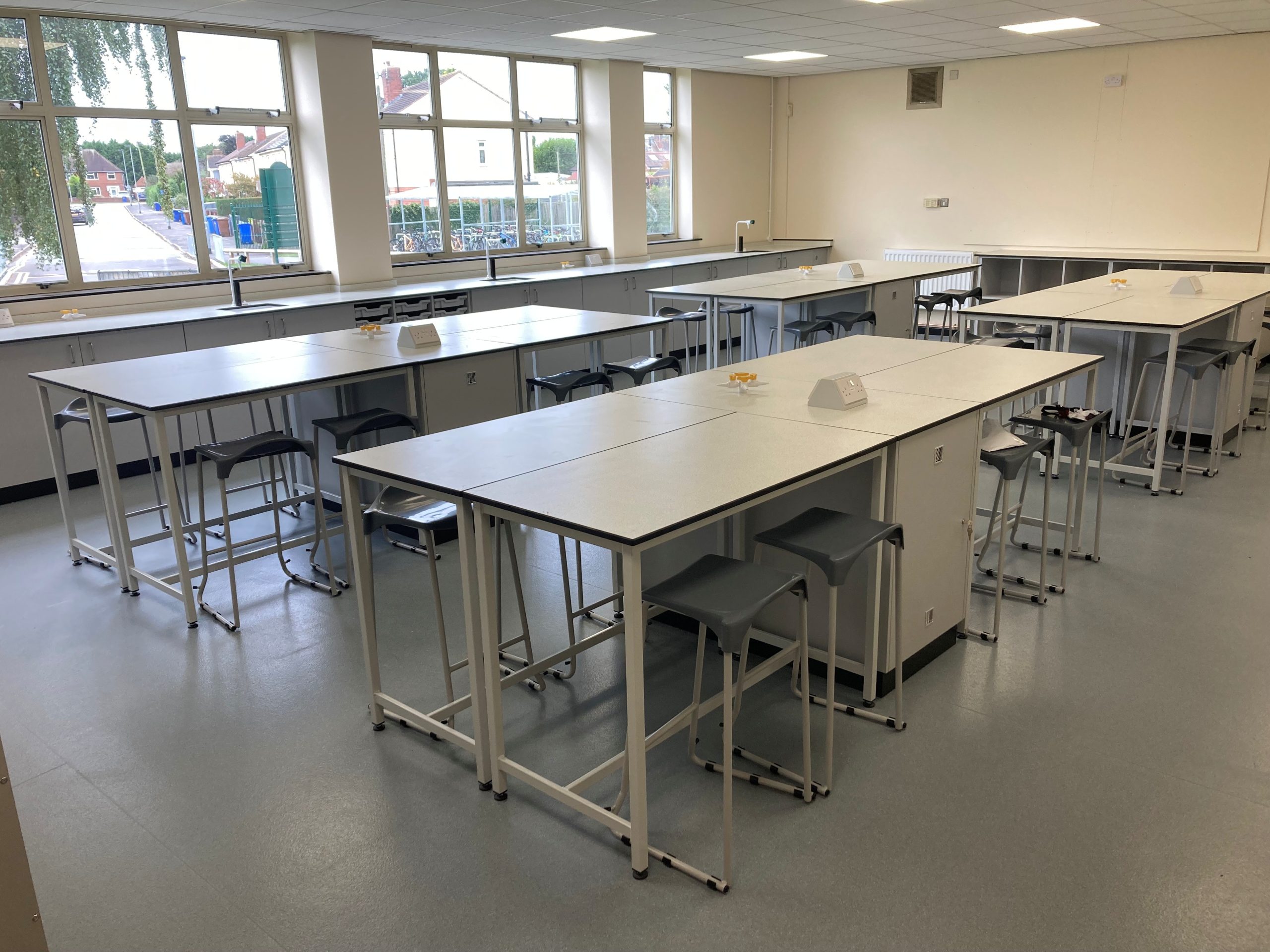
The traditional science laboratory rows of fixed benches, permanent gas taps at every station, immovable stools bolted to the floor was designed for a curriculum that no longer exists in its original form. Combined science, STEM clubs, sixth-form independent research, and the growing role of data-driven practical work have transformed what teachers actually need from a lab. In 2026, the single most common request Labform receives from schools planning a refurbishment is for a lab that can adapt. This guide explains what agile lab design actually means in practice, what can and cannot be made flexible, and how to achieve genuine adaptability without compromising the safety standards that make a science lab a compliant teaching environment.
Key Takeaways
- Agile Does Not Mean Unsafe: Flexible lab design is entirely compatible with CLEAPSS G99 compliance when planned by a specialist who understands both the pedagogical and regulatory requirements.
- Some Elements Must Stay Fixed: Gas, water, and drainage services cannot be made truly mobile without creating serious safety risks. The flexibility is designed around these fixed points.
- Curriculum Change Is the Driver: Combined science, T-Levels, and STEM programming are all driving demand for spaces that can shift between experimental, lecture, and project-based configurations.
- Furniture Design Is Where Agility Lives: Reconfigurable bench systems, mobile storage, and stackable seating deliver genuine flexibility without touching the M&E infrastructure.
- Agile Design Has a Longer Asset Life: A lab designed for adaptability remains fit for purpose through multiple curriculum changes, extending the return on the capital investment.
Curious about how we’ve helped UK schools transform their classrooms? Explore our case studies here to see real-world examples of our innovative classroom conversion solutions!
What Has Changed: The Curriculum Drivers
Understanding why agile furniture is now the dominant request from school labs requires understanding what has changed in the curriculum. The following are the four most significant shifts that Labform's design team hears consistently from teachers and heads of science.
Combined Science Over 70% of GCSE students now take Combined Science rather than separate sciences. This means a single lab must support chemistry, biology, and physics practicals across the same teaching week each with different space, storage, and configuration requirements.
STEM Programmes Science labs are increasingly used outside timetabled lessons for STEM clubs, after-school enrichment, and competition preparation. These activities require flexible, informal configurations that fixed-bench layouts simply cannot accommodate.
Data-Led Practicals The integration of data loggers, tablets, and laptop use in practical science means students need flat, clear workspace alongside their experimental setup not just the narrow strip of bench traditionally allocated to recording results.
T-Level Science The T-Level in Science is designed around project-based, industry-aligned learning. Students working on extended practical projects need the ability to reconfigure the space around their project, not around a fixed experimental layout.
Agile vs. Fixed: Understanding the Real Difference
The term "agile" is sometimes used loosely in school furniture marketing to mean little more than stackable chairs. In a genuine agile lab design, the flexibility is structural built into the specification of the furniture system itself, not applied as an afterthought.
Traditional Fixed Lab
- Permanent bench positions layout cannot change
- Gas and water at every station regardless of use
- Storage fixed to walls and benches
- Single configuration for all teaching types
- Difficult to accommodate group project work
- Replaced in full when curriculum changes
Agile Lab Design
- Modular bench systems multiple layout configurations
- Services zoned to specific fixed points; benches reconfigure around them
- Mobile storage units that move with the layout
- Supports experimental, lecture, and project modes
- Flexible grouping for collaborative STEM work
- Furniture updated independently of M&E infrastructure
What Can and Cannot Be Made Flexible
This is the most important section of this guide for any school considering an agile lab design. There is a fundamental distinction between the elements of a science lab that can be designed for flexibility and those that must remain fixed for safety and compliance reasons. A specialist who tells you that everything can be made mobile does not understand CLEAPSS G99.
✓ Can Be Designed for Flexibility
Bench Systems — Modular bench units on castors or lightweight frames can create multiple layout configurations while remaining stable during use.
Mobile Storage — Freestanding storage units with lockable castors can be repositioned between lessons, placing equipment where it is actually needed.
Demonstration Bench — Island demonstration benches can be designed to move within a defined service zone rather than being permanently fixed in position.
Lighting Zones — Addressable LED lighting can be zoned to match different layout configurations, ensuring appropriate illumination wherever benches are positioned.
AV & Data Points — Ceiling-mounted power and data distribution eliminates floor-level trip hazards and allows AV equipment to be used in any layout.
Seating — Height-adjustable lab stools that stack allow the room to shift rapidly between high-bench experimental and flat-table project configurations.
✗ Must Remain Fixed (Safety & Compliance)
Gas Services — Gas supply points must be fixed, with interlocked solenoid valves and dedicated pipework. CLEAPSS G99 does not permit mobile gas connections.
Water & Drainage — Hot and cold water supplies and chemical-grade drainage must be permanently installed. Flexible hose connections to mobile units are not compliant for science lab use.
Fume Cupboards — Fume cupboards require fixed extraction ductwork connected to the building's ventilation system. Their position cannot change after installation.
Design Principle: "In an agile lab, the M&E services define the zones and the furniture reconfigures within those zones. The flexibility is real, but it is engineered around the fixed compliance infrastructure, not designed to replace it."
How Labform Designs for Agility
Labform's approach to agile lab design begins with a mapping exercise that identifies the fixed M&E service points gas, water, drainage, and fume cupboard positions and then designs a furniture system that maximises layout flexibility within and between those points. The result is a lab that can shift between a standard class experimental layout, a STEM project workspace, and a lecture-style demonstration configuration within a single lesson changeover.
The Service Zone Approach
Rather than placing gas and water at every bench position which locks the layout permanently Labform designs service zones: defined areas of the lab where gas and water services are concentrated. Modular bench units can be positioned anywhere in the lab but are designed to connect into these zones when services are required. When the layout is reconfigured for a non-services activity, the benches move freely.
Integrated Void Spaces
Labform's bespoke furniture incorporates void spaces within the bench structure for pipework and cable management. This means that when benches are repositioned, the services infrastructure is not exposed or left visually compromised. The result is a clean, professional finish regardless of the current layout configuration.
25-Year Design Horizon
Every Labform design is built to a 25-year lifecycle. Agile design extends this further a furniture system that can be reconfigured rather than replaced means that the school's capital investment survives multiple curriculum changes. Individual bench units can be added, removed, or replaced without a full refurbishment, making the cost of adaptation considerably lower than the cost of replacement.
With over 40 years of experience designing science labs specifically for UK schools and academies, Labform understands the long-term relationship between a teaching space and the curriculum it serves. Agile design is not a trend it is a response to the genuine evolution of science education in this country, and it requires specialist knowledge to deliver safely and compliantly.
Talk to our design team about agile lab furniture and flexible layout solutions for your school. Our free feasibility consultation includes a layout analysis and curriculum mapping exercise. Request a Flexible Lab Design Consultation
Read Next
Sorry, we couldn't find any posts. Please try a different search.